The Fundamental Concepts are the key to understanding FIB-DM design and content.
All Fundamental concepts are ultimate supertypes in the FIBO data model. 90% of FIB-DM entities have a Fundamental Concept as their ultimate supertype. The Object Management Group’s (OMG) Commons Ontology Library defines most fundamental concepts. FIBO imports the OMG Commons ontologies, and the FIB-DM Commons packages are transformed from the latest OMG Commons version 1.3 beta, released in December 2025.
Concept Maps are a tool for data modelers and ontologist to communicate and refine their design with Business Users. The standardized FIB-CM (Financial Industry Business Concept Maps) uses 15 icons and acronyms.
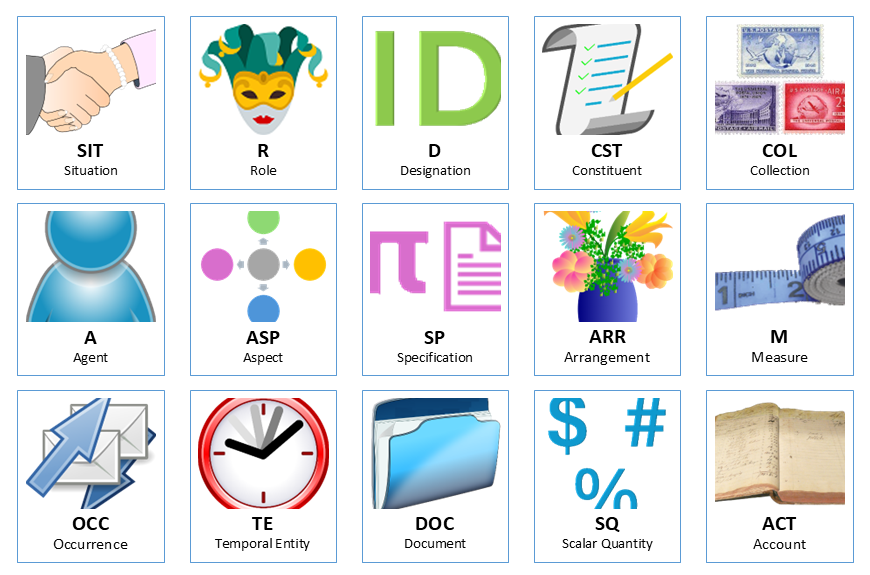
755 Associative Entities define relationships in the FIBO Data Model. They define a standardized vocabulary for naming relationships between concepts (the labels on the arrows in a concept map).
For every concept, the Gallery has a diagram of its most significant associations with other concepts.
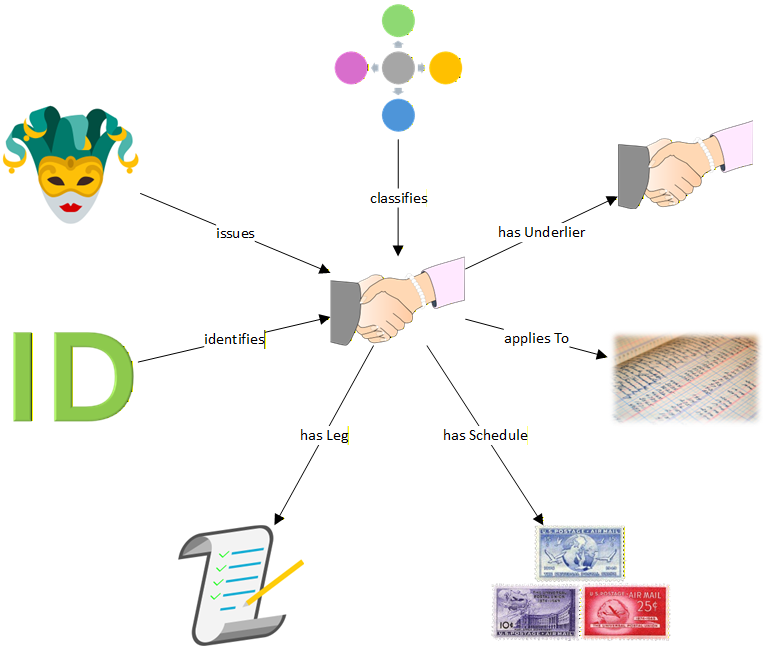
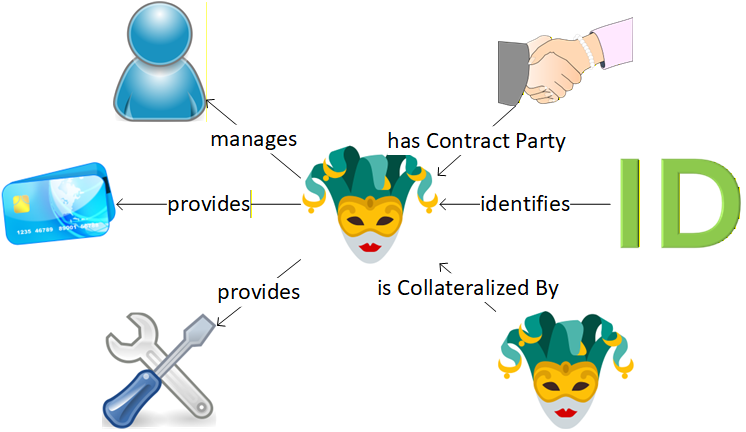
Minor concepts can be used as needed to supplement the design

The FIB-DM Education Unit, Semantics for Finance Users, is an in-depth treatment of the Fundamental Concepts and FIB-CM.
Here is a brief explanation, with examples, of the associations shown in the diagrams.
Situation (SIT)
- The contract parties, lender, borrower, and guarantor, are roles.
- Various Aspects, classifications, and codes may apply.
- The (payment) schedule is a Collection
- A designation identifies the contract (loan number, ID)
- Contractual Elements, a Constituent, define terms.
- Situations relate to Other Situations: A loan may have a guaranty agreement, and many Financial Instruments have underliers.
Role (R)
- The Functional Entity manages its Legal Entity.
- Registration and license numbers identify the Role.
- A Role will relate to another Role. For example, Collateral is Collateralized by Asset.
- The Identifiers, in turn, identify other Functional Entities or Service Providers.
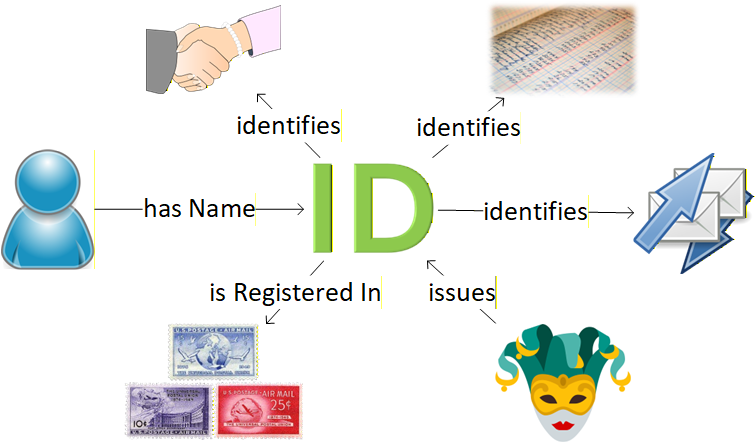
Designation (D)
- A Person or Business has a Name.
- ID or Number identifies Contract, Account, and Transactions.
- A Registrar issues registration numbers, which are registered in a Registry. E.g., in the U.S., the FDIC issues Certificate Numbers for licensed Depository Institutions.
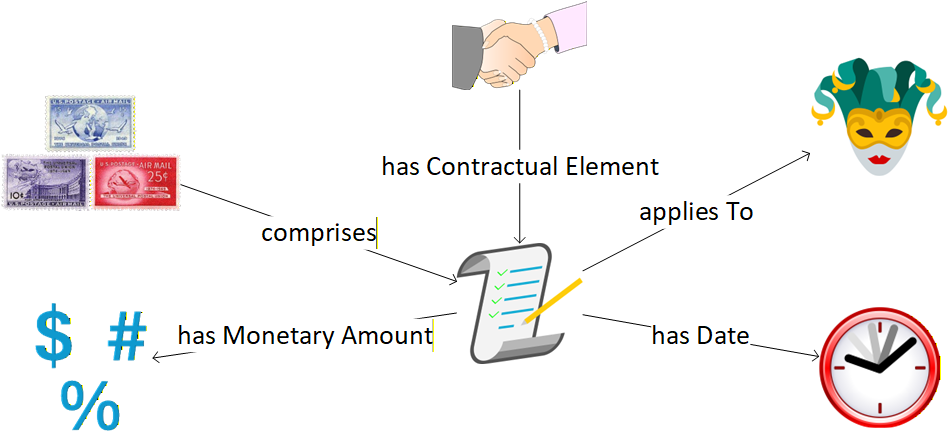
Constituent(CST)
- The Registry, a Collection subtype, comprises Registry Entries.
- Agreements, under the Situation concept, have Contractual Elements and may apply to a Party Role.
- A Contractual Element often specifies Date and Amount. For example, a Loan Agreement Contractual Element would specify principal and due date.
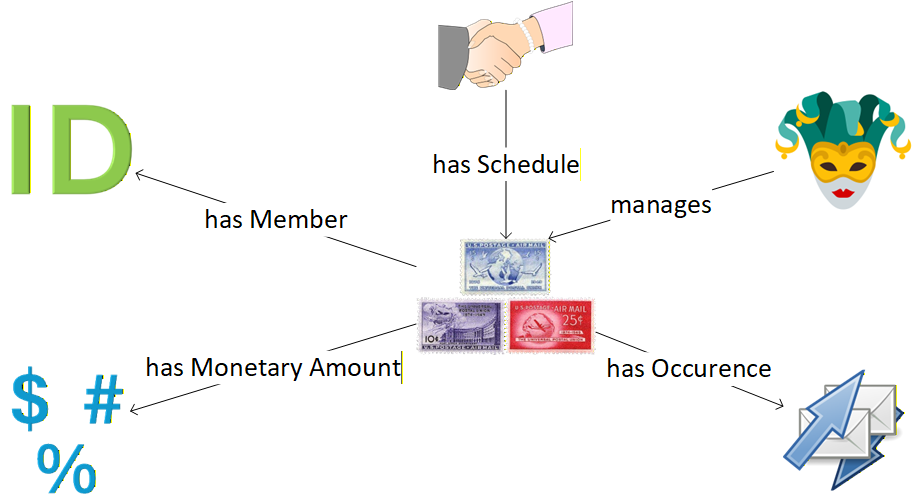
Collection (COL)
- The Collection has Members, typically identifiers. E.g., ZIP codes are postal identifiers within the ZIP Code Scheme.
- Agreements have Schedules, such as the payment schedule for a Loan.
- A Functional entity manages the Collection (Registrar, Portfolio Manager)
- The Schedule has Occurrences, the dated events. For example, a Payment Schedule includes dates and Amounts to be paid.
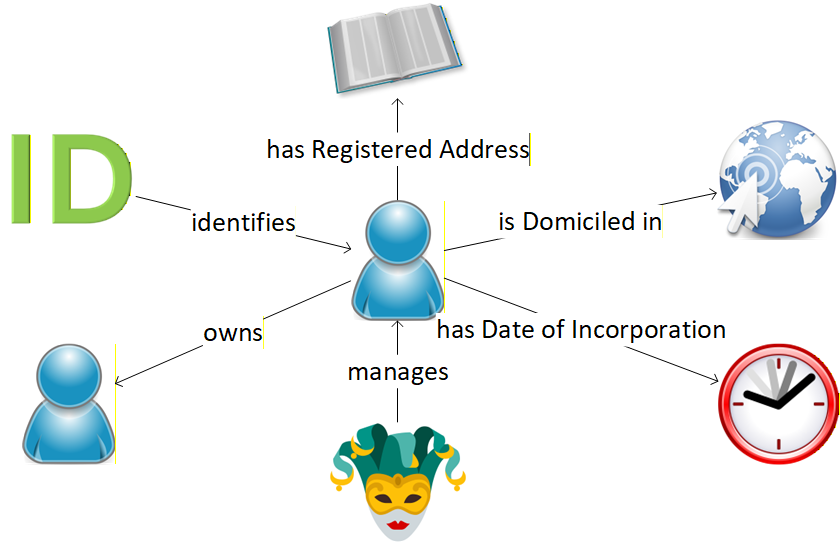
Agent (A)
- IDs identify the Agent, e.g., the Passport identifies a Person.
- The Agent has Addresses; the corporation is Domiciled in some Geopolitical Entity
- A Corporation has a Date of Incorporation, and a Person has a Date of Birth.
- The Functional Entity manages its Legal Entity.
- Agents own other Agents: The hierarchy of subsidiaries.
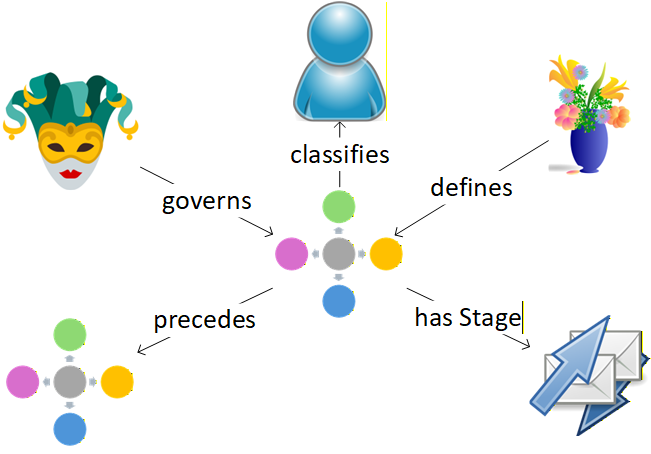
Aspect (ASP)
- A Functional Entity may govern the Aspect.
- Aspects classify other concepts, for example, the Type of a Legal Entity.
- A Classification Scheme (Arrangement concept) defines the Classifier Aspect
- The Lifecycle Status has a Stage (an Occurrence)
- A Lifecyle State precedes another.
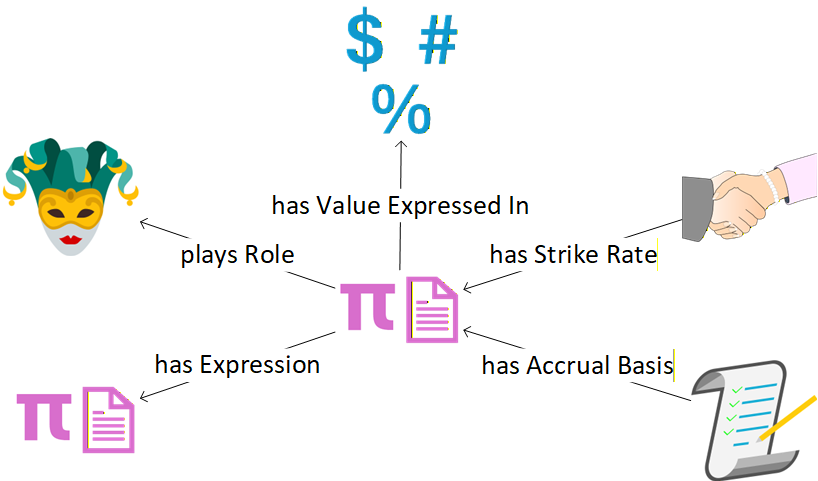
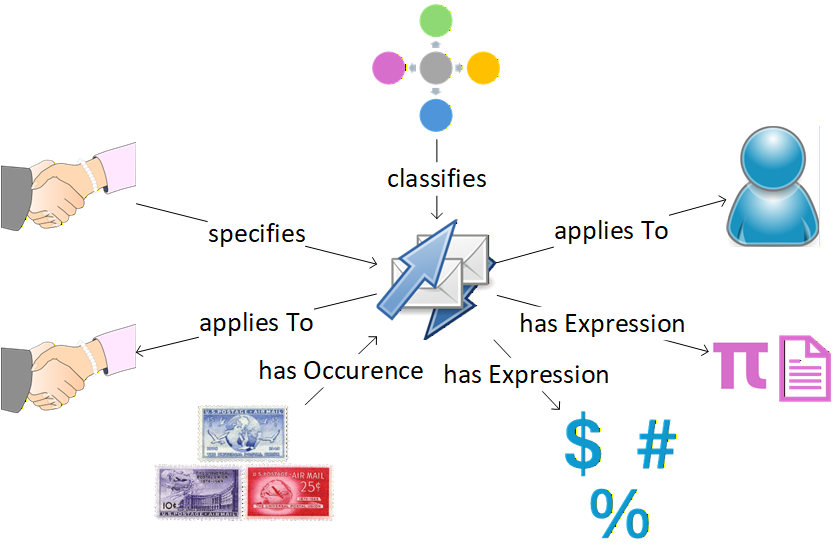
Specification (SP)
- The Specification may play a Role as an object.
- Its value can be expressed as a Scalar Quantity.
- Elaborate Specifications describe Derivatives, for example, the Strike Rate of an Option.
- Contractual Elements have Specifications, such as the Accrual Basis of a Loan.
- A Formula has one or more Expressions.
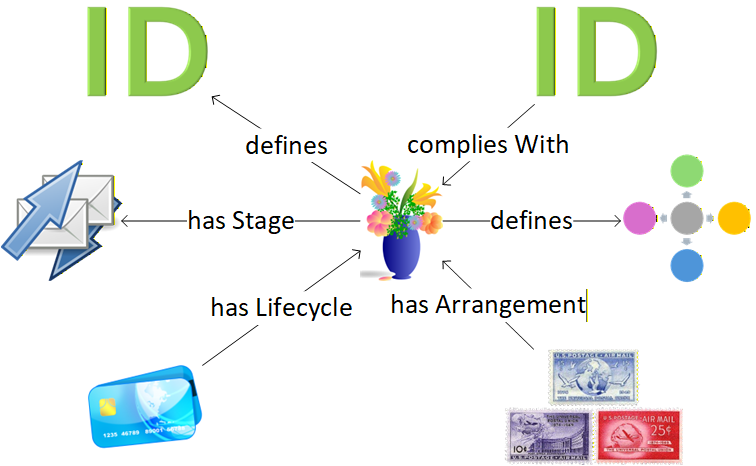
Arrangement (ARR)
- Arrangements define Identifiers, which in turn comply with the Arrangement.
- Arrangement defines Aspect, and the Collection may have an Arrangement.
- Various things, like Products have a Lifecycle.
- The Lifecycle has a Stage, an Occurrence.
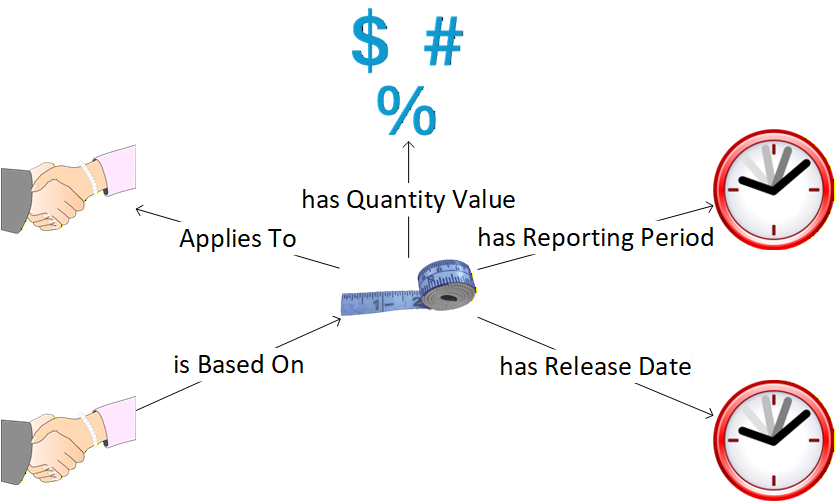
Measure (M)
- Many Measures apply to Derivatives ( a subtype of the Situation)
- Some Bonds are Based On Economic Indicators (Inflation-Linked Bond).
- The actual number of the Measure is a Quantitaty Value.
- Measures can have dates and intervals.
- Economic indicators have a release date.
Occurrence (OCC)
- Many Occurrences apply to Contracts (their lifecycle).
- Securities may specify an Occurrence, for example, an Interest Rate Reset.
- An Aspect may classify the Occurrence.
- Calculation Occurrences have an Expression; the result of the calculation is a Scalar Quantity Value.
- A Schedule (Collection) has Occurrences.
- The Default Event applies to a Legal Person (Agent concept)
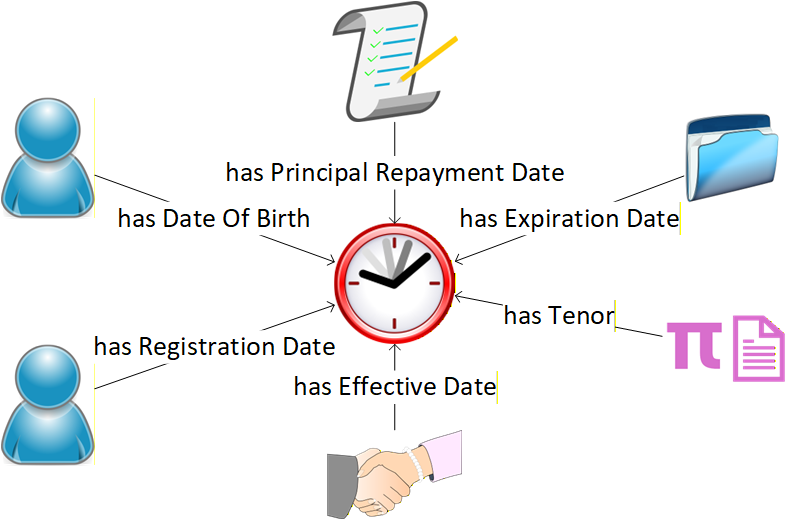
Temporal Entity (TE)
- A Person has a Date of Birth, and a Corporation has a Registration Date.
- The Consituent includes various dates that specify the terms of a contract or Financial Instrument.
- Documents have expiration dates (cards, identity documents, and offerings).
- A contract usually has an effective date.
- A Reference Interest Rate has a Tenor.
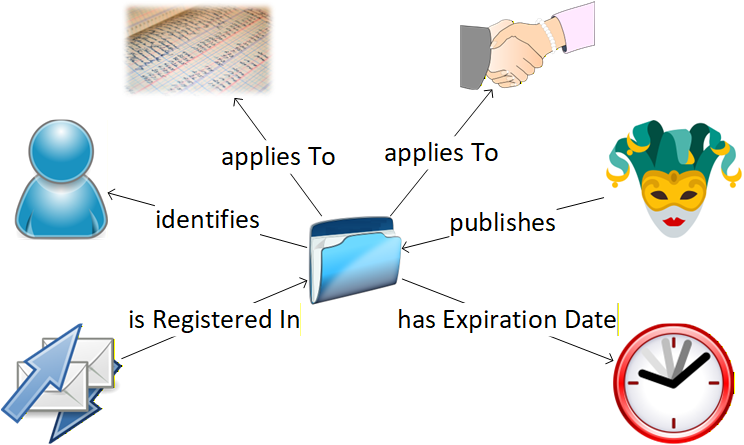
Document (DOC)
- An Identity Document identifies a Person.
- The plastic Credit Card applies to a Credit Card Account.
- A Contract Document applies to an Agreement.
- The Publisher (a Role) publishes the Publication.
- A Document has an Expiration Date.
- The Transaction is registered in the Transaction Record.
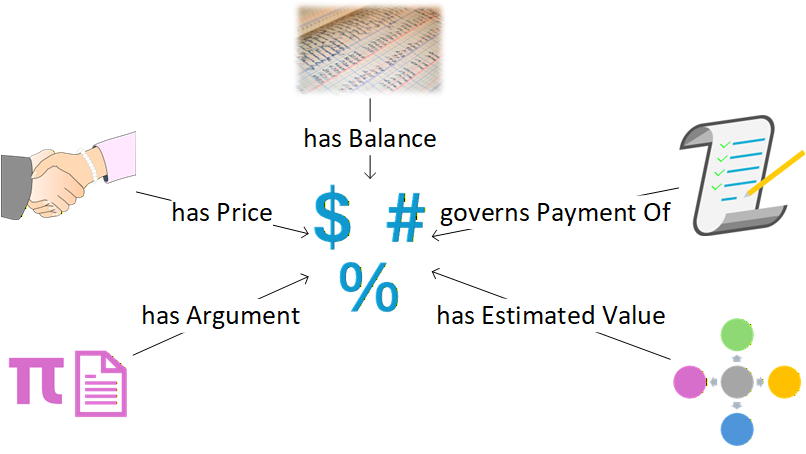
Scalar Quantity (SQ)
- The Expression has a Scalar Quantity Value as an Argument.
- The Security, a Situation, has a Closing Price.
- The Account has a Balance.
- Debt Terms, a constituent, govern the Payment of Interest.
- The Appraised Value, an Aspect, has an Estimated Value, the Market Value.
Legal Construct (LC)
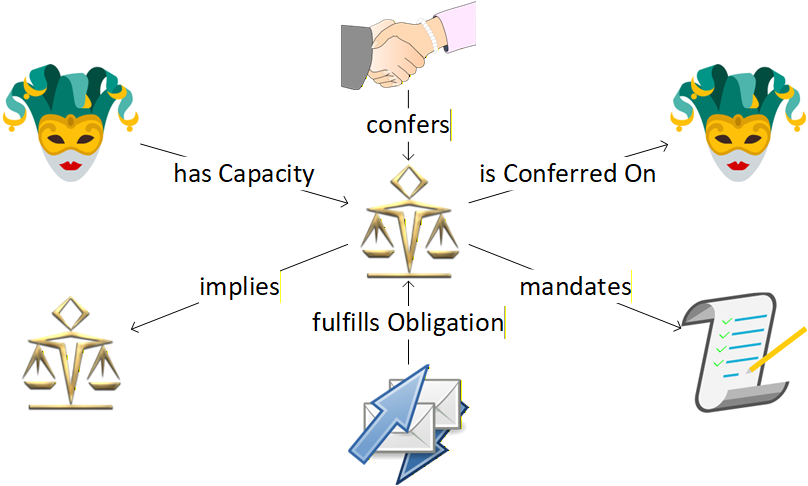
- A Legal person has Contractual Capability or Regulatory Capacity.
- An Agreement confers a Contractual Right.
- De Jure Control is Conferred On a Party.
- A Contractual Right may imply a Legal Obligation.
- A [contract] Constituent can mandate a Legal Obligation.
- The Payment event fulfills the Payment Obligation.
Reference (REF)
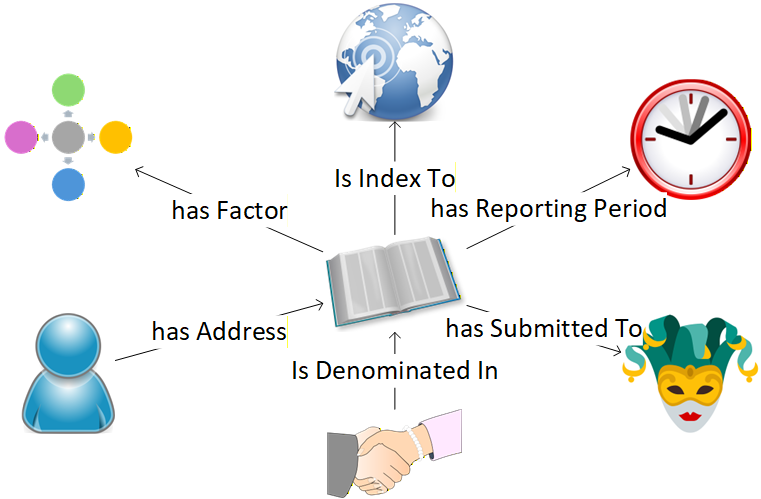
- The Measurement Unit has a Factor, the Unit Power Factor, which is an Aspect.
- The Address is an Index to the Physical Location.
- A Regulatory Report has a Reporting Period and is Submitted to a Regulator.
- A Financial Instrument is Dominated in a Currency.
- A Party has both a Physical and an Electronic Mail Address.
Facility (FAC)
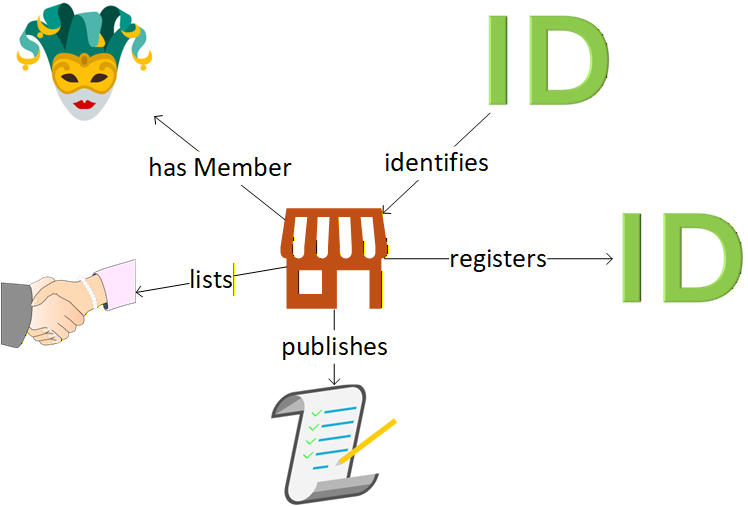
- The Exchange has Financial Service Providers as Members.
- A Market Identifier identifies the Exchange.
- The Facility registers Registration Identifiers.
- The Exchange publishes Listing Terms and lists Securities.
Product (PRD)
- A Buyer (the customer) buys the product, and the Seller (our FI) sells it.
- The Product uses a Currency (a reference concept).
- A Catalog (or other Document) describes the Product.
- The Financial Service Provider provides the Financial Product.
- The Credit Card Account exemplifies the Credit Card Product, and the Credit Card Agreement applies to it.
- The Packaged Financial Product comprises other Financial Products.
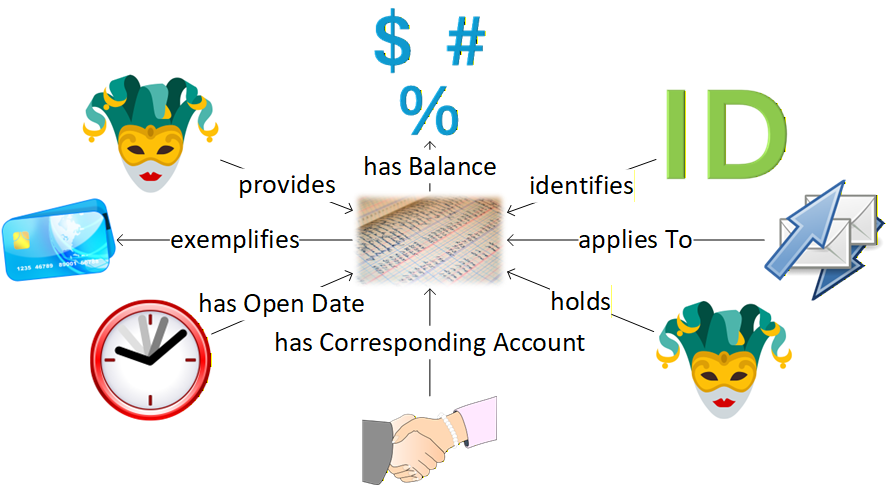
Account (AC)
- The Financial Institution provides the Account.
- It has a Balance, which is a Scalar Value.
- An Account Identifier or Number Identifies the Account.
- Individual Transactions apply to the Account.
- The Customer, and sometimes an Escrow Agent or a Custodian, holds the Account.
- The Loan has a Corresponding Account.
- The Account has Open, Close, and other dates associated.
- The Account may exemplify a Product.
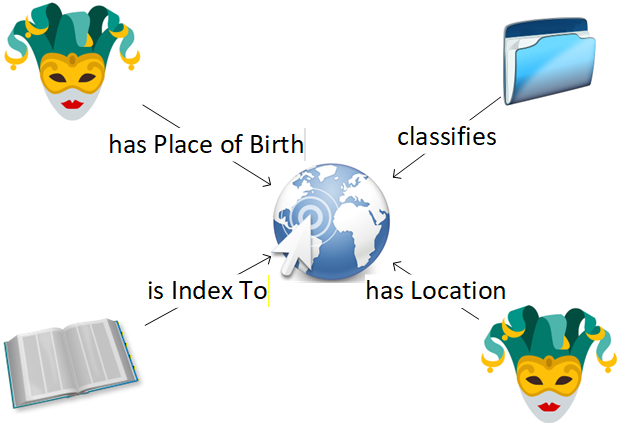
Location (LOC)
- A Person has a Place of Birth, and a Birth Certificate or Identity Document serves as Evidence of it.
- The Physical Address, a Reference, is an Index To the Physical Location.
- A Household (a role concept) has a Location.
Service (SVC)
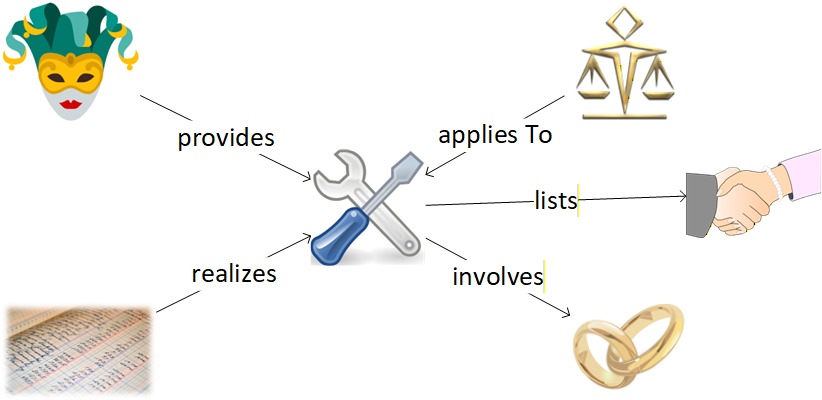
- Things in Role provide services.
- The Account realizes the service.
- An agreement may specify services; for example, a Listing Service may list Securities and Agreements.
- A Payment Service involves a Payment Obligation, which is a Commitment.
- Some Legal Constructs apply to Services.