The foundation data model package includes generic design patterns such as dates and times, virtual and physical places, agents and parties, agreements, and arrangements.
Specific packages use foundation entities in derived subtypes and relationships.
Package hierarchy
The FIBO Foundations packages have the basic building blocks of FIB-DM. FIBO Foundations deals with the underlying concepts of contracts, agents, agreements, transactions, processes, dates, time, goals, legal concepts including jurisdiction and capacity, organizational types, the meaning of ownership and control, the concept of parties and roles, baseline concepts associated with products and services, the fundamental accounting concepts, units of measure, quantities, and schedules. FIBO Foundations is the essential scaffolding on which the other FIBO modules are built.
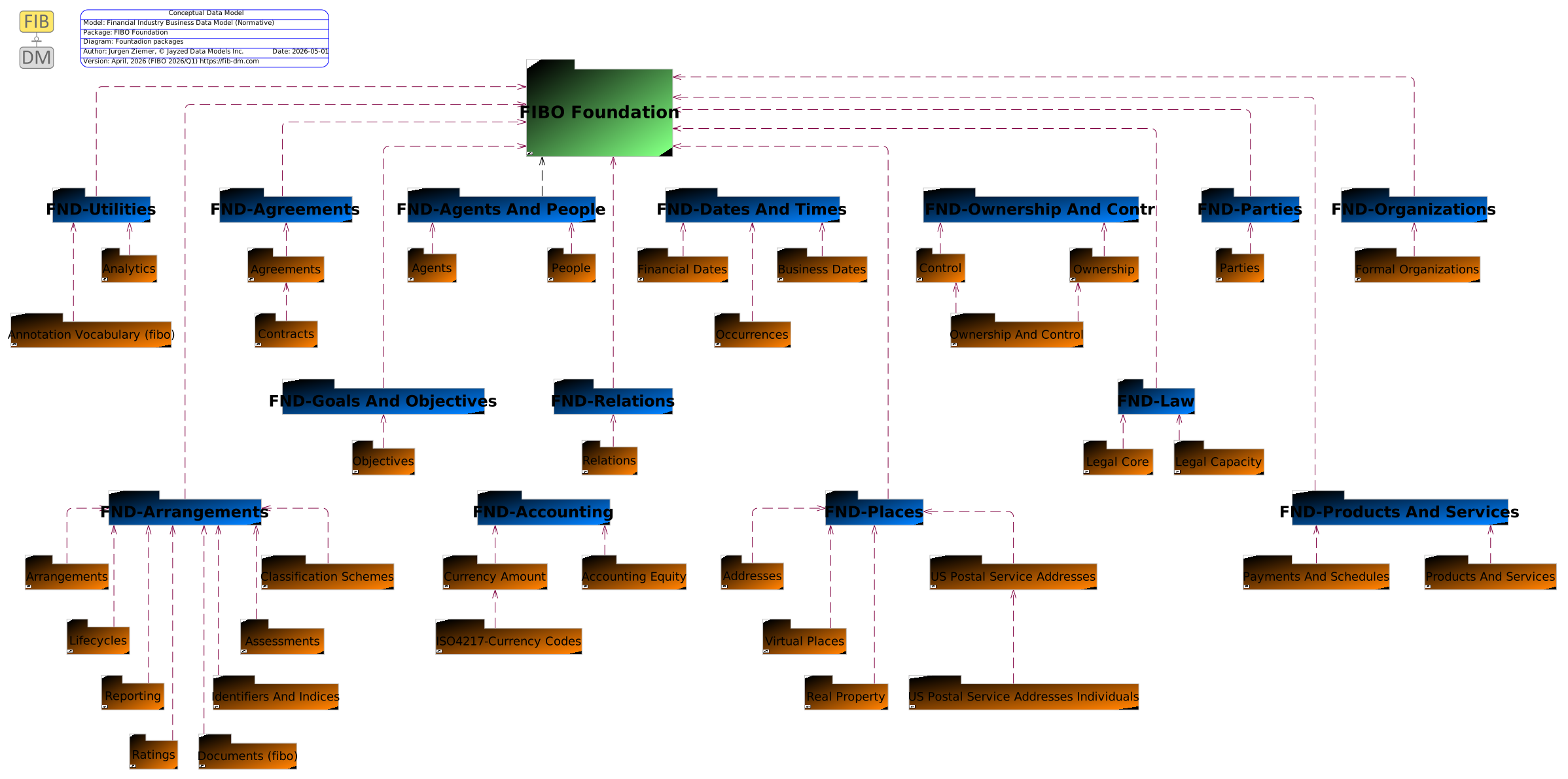
Click on a thumbnail to open the Scalable Vector Graphics (SVG) diagram. Then, use your browser to scroll and zoom in and out.
ER Diagrams
The gallery has conceptual data model diagrams for selected Foundation leaf packages.
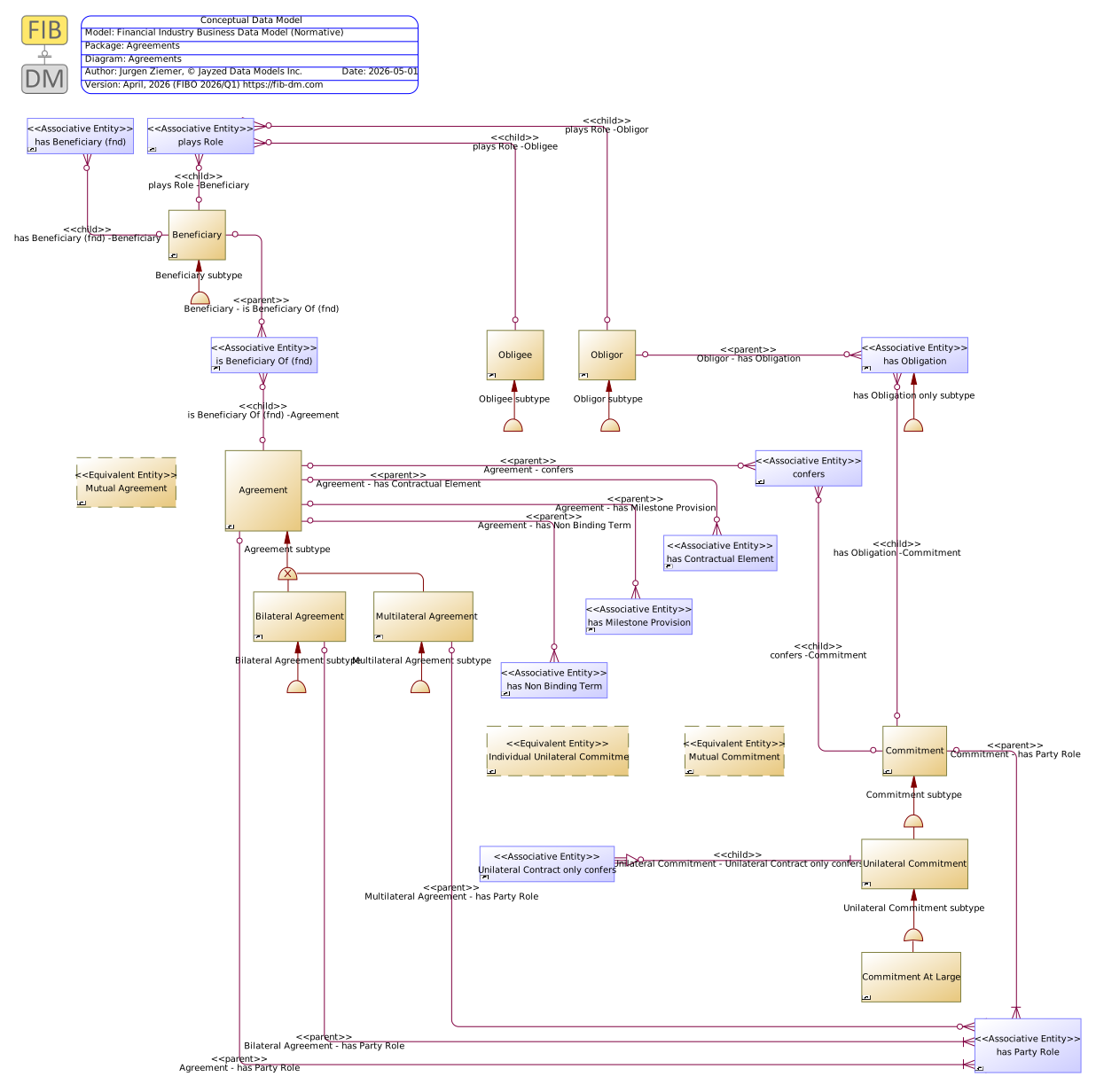
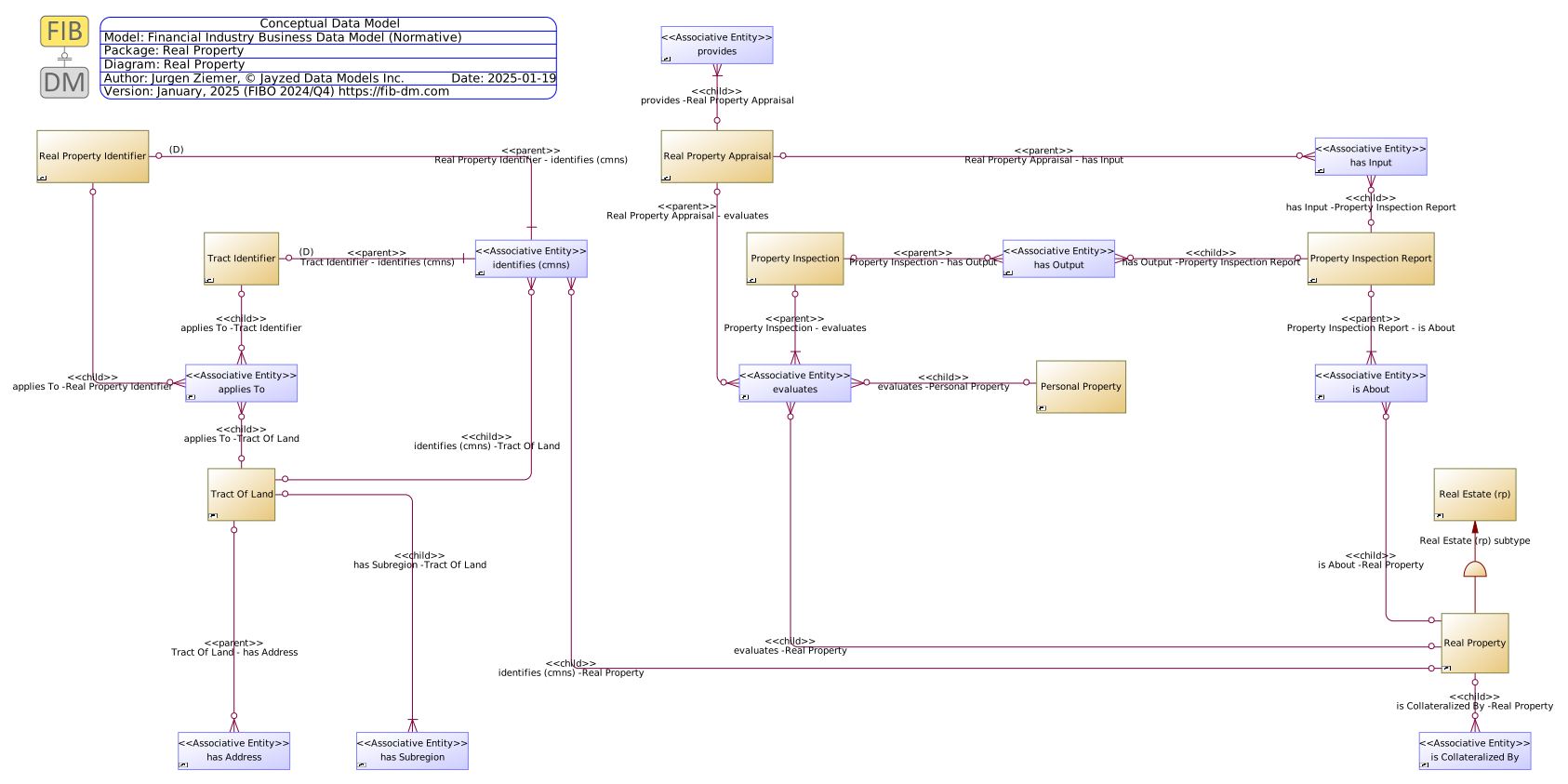
Click on an image to open the full-size, Scalable Vector Graphic in a separate tab.
Package descriptions
The package descriptions derived from the FIBO ontology annotation properties. Some diagrams have an intro to help you understand them.
Real Property
The Real Property package models information about land and buildings.
The property may have Inceptions and Appraisals. It has a Real Property Identifier. The Tract (or Lot) defines the boundaries of the land and includes a Tract Identifier.
While this information is essential for Real Property as collateral in a Mortgage, it is independent of the Loan. Hence, Real Property is a sub-package of FIBO Foundation Places.
Agreements
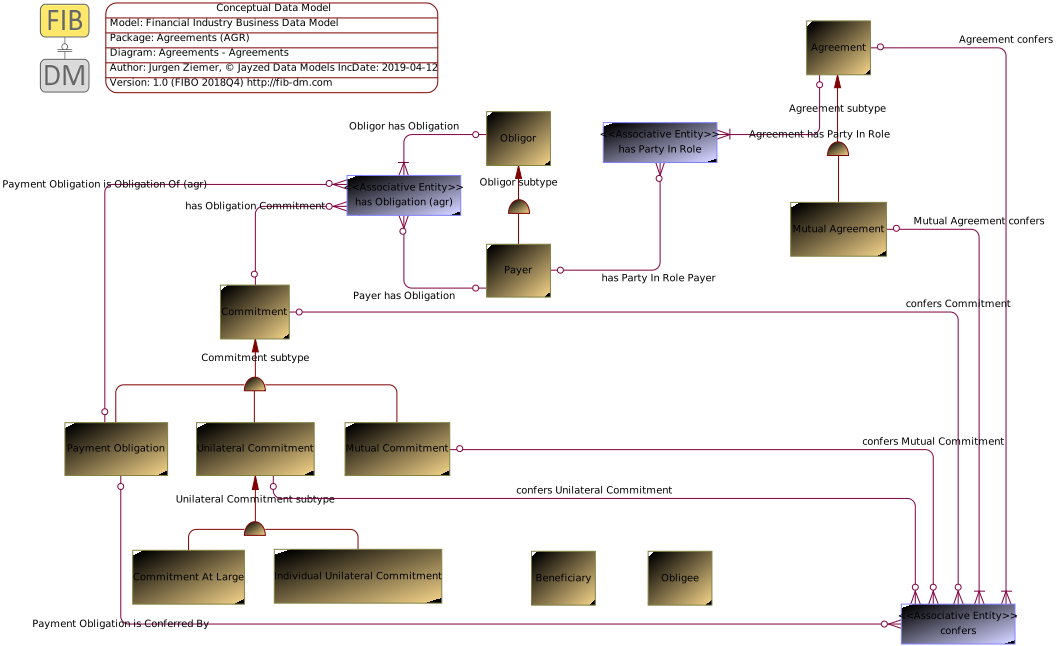
The package for data model objects derived from the Agreements ontology module. This ontology defines the concept of an agreement and the roles that parties to an agreement play in the context of financial agreements. Agreements represent understandings between parties, whereas contracts typically formalize them.
The Agreement entity is a subtype of the OMG Commons Situation concept.
Contracts
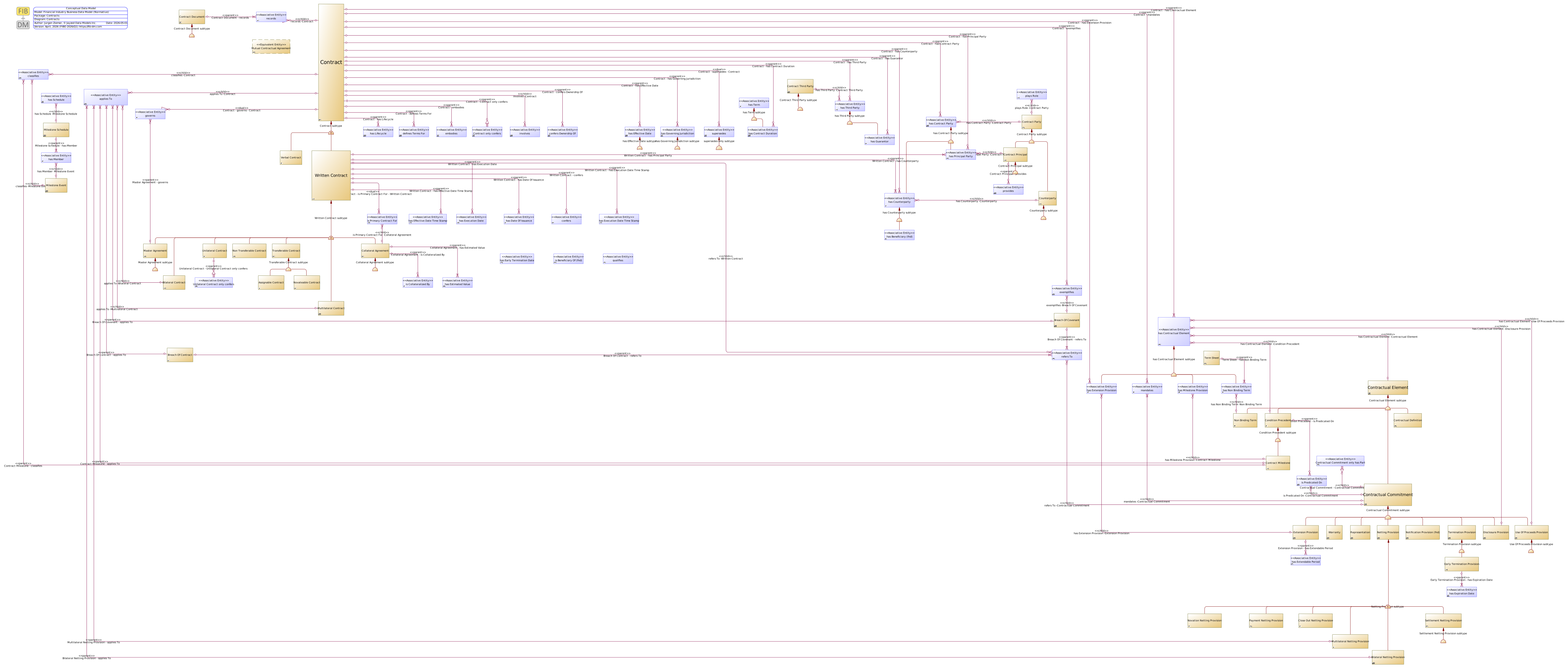
The package for data model objects derived from the Contracts ontology module. This ontology defines the concept of contract and the roles that parties to a contract play in the context of financial agreements. Coverage includes written contracts, which are the concrete evidence of agreements between parties, and verbal contracts. Contracts are further broken down into bilateral and transferable contracts, the latter being the basis for most financial instruments, and basic properties of contracts, such as terms and conditions, are also covered.
With 78 entities, Contracts is one of the largest packages in the FIBO Data Model. Contracts extend the more generic Foundation Agreements with Finance-specific content common to Loans and Financial Instruments.
The FIB-DM diagram convention helps the data architect/modeler to understand the complex design.
In the upper left, we find the Contract and its subtype, the Written Contract. Numerous Associative entities in blue relate to Base Entities that define and describe the contract (some of which are defined in other packages).
The “has Contractional Element” Associative entity (and its subtype) connects the Contract to its Contractual Elements in the lower right, foremost the Contractual Commitments.