The diagrams reflect the latest version of the Object Management Group (OMG) Commons Ontology Library, 1.3 beta, released in December 2025.
Packages
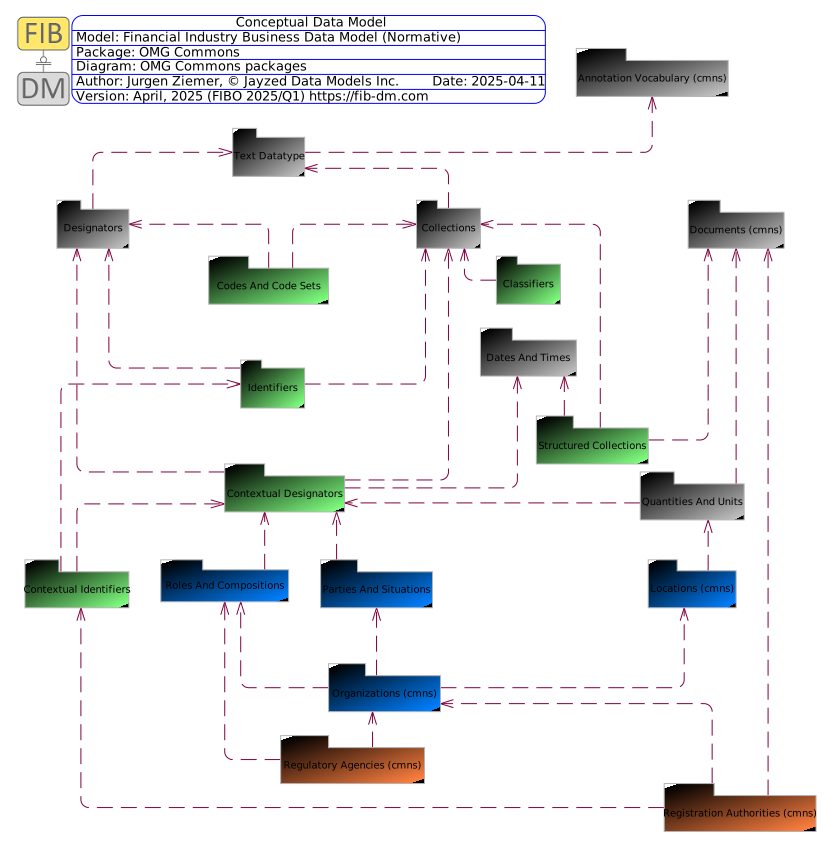
The diagram shows the data model packages derived from the Object Management Group’s Commons ontologies. The arrows derived from ontology imports and correspond to the entity hierarchy in the Financial Industry Business Data Model. The most generic entities in Text, Collections, and Designators are supertypes for Classifiers, Codes, and Sets, which in turn are supertypes for Identifiers, Quantities, Roles, and Parties.
Package diagrams
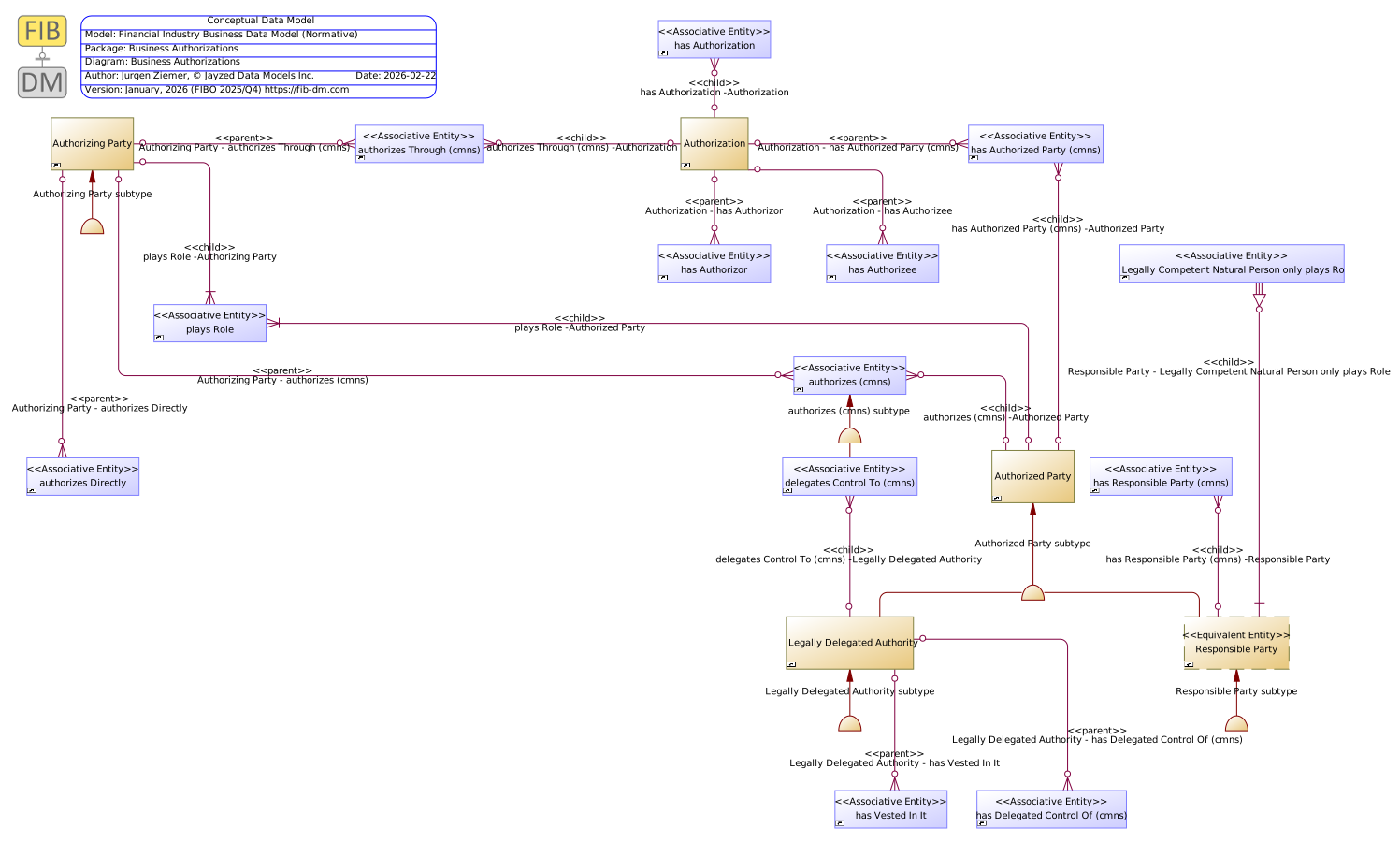
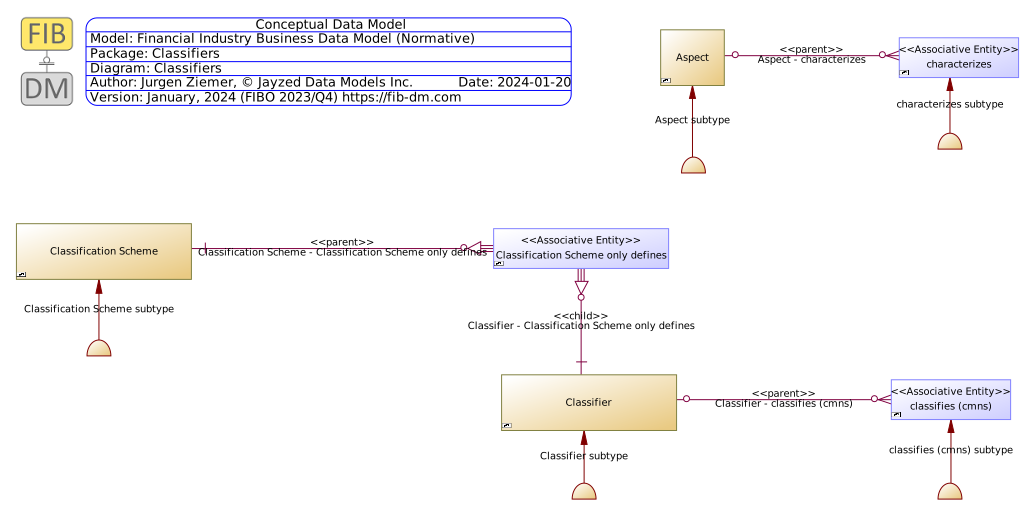
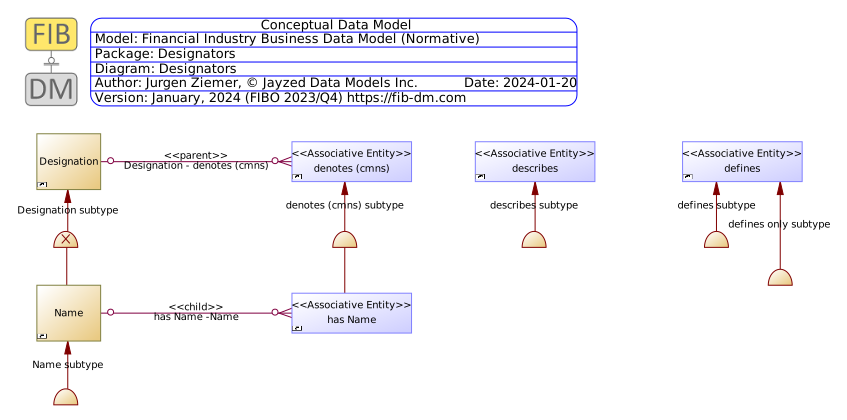
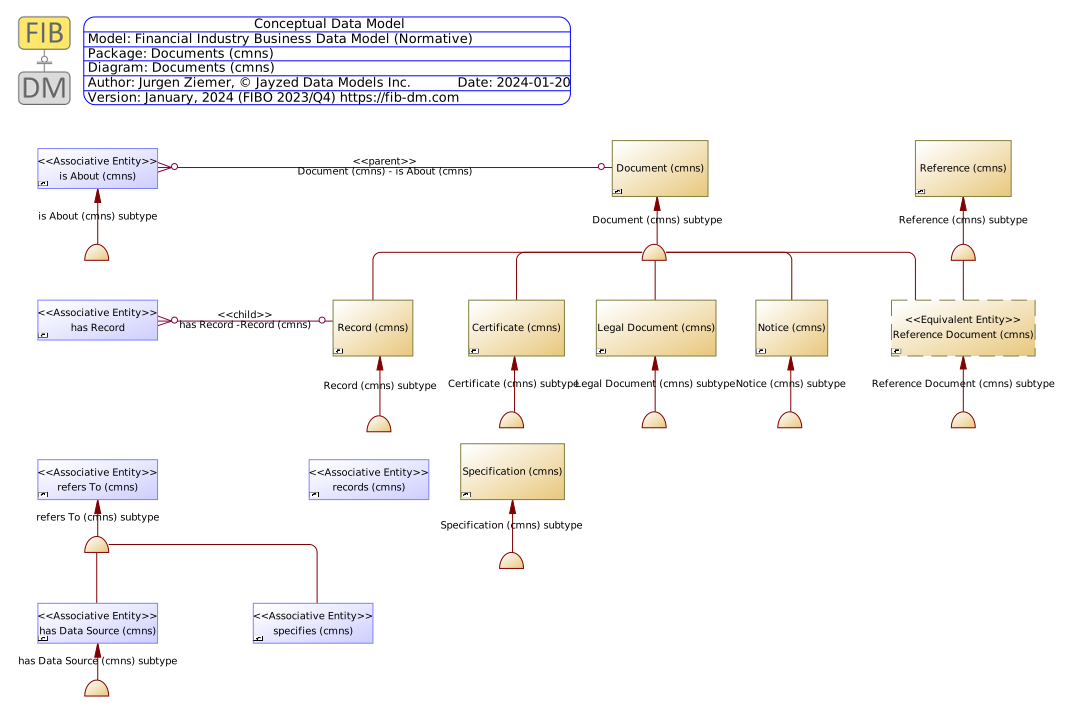
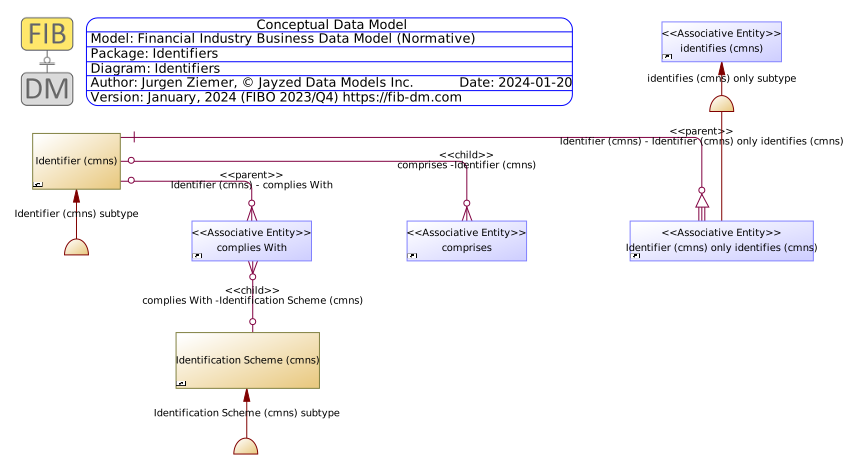
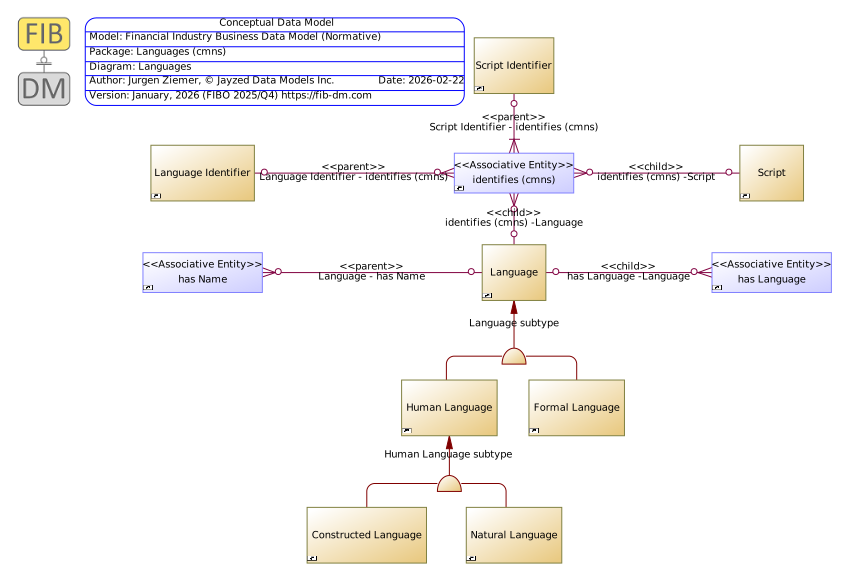
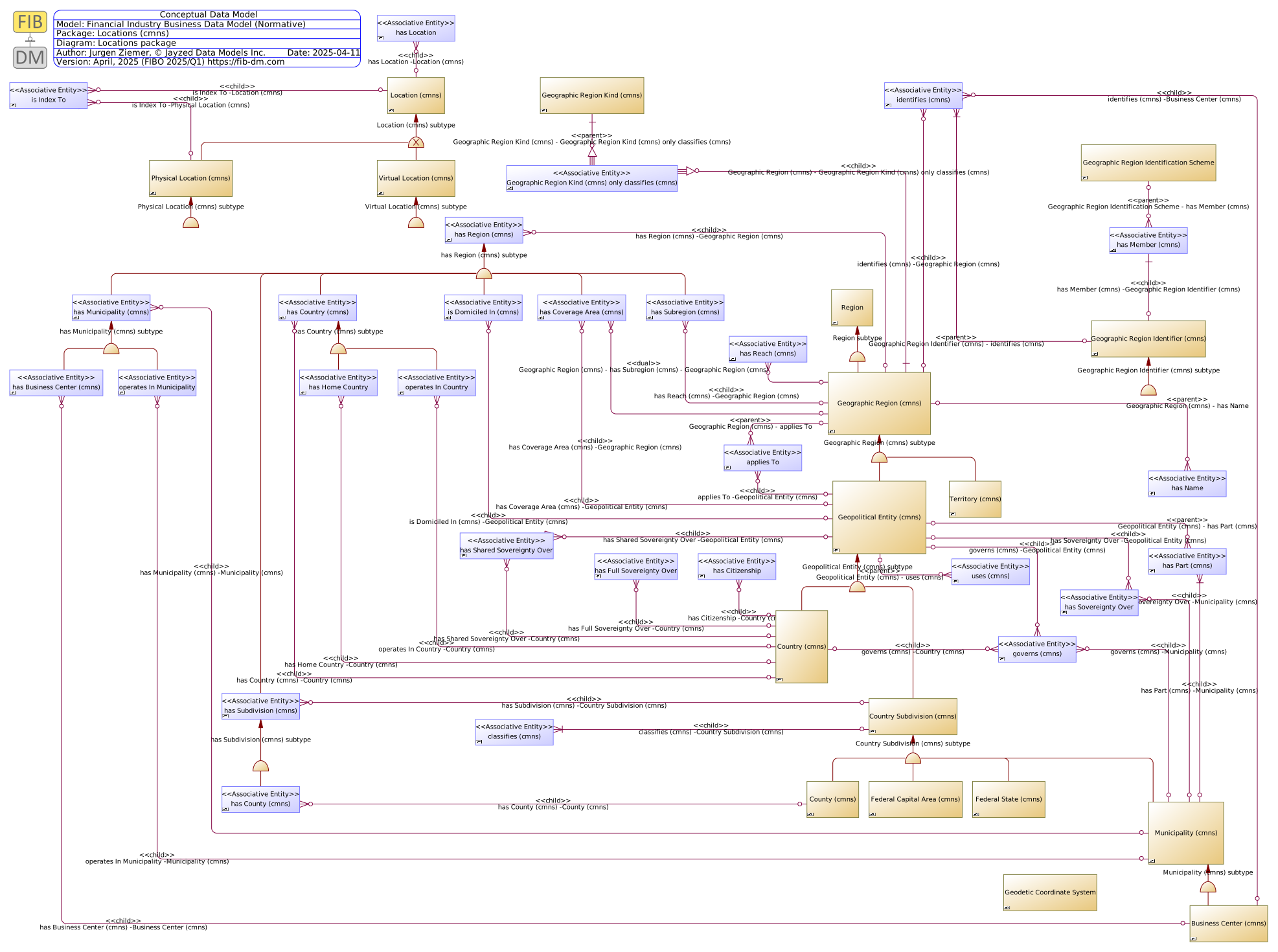
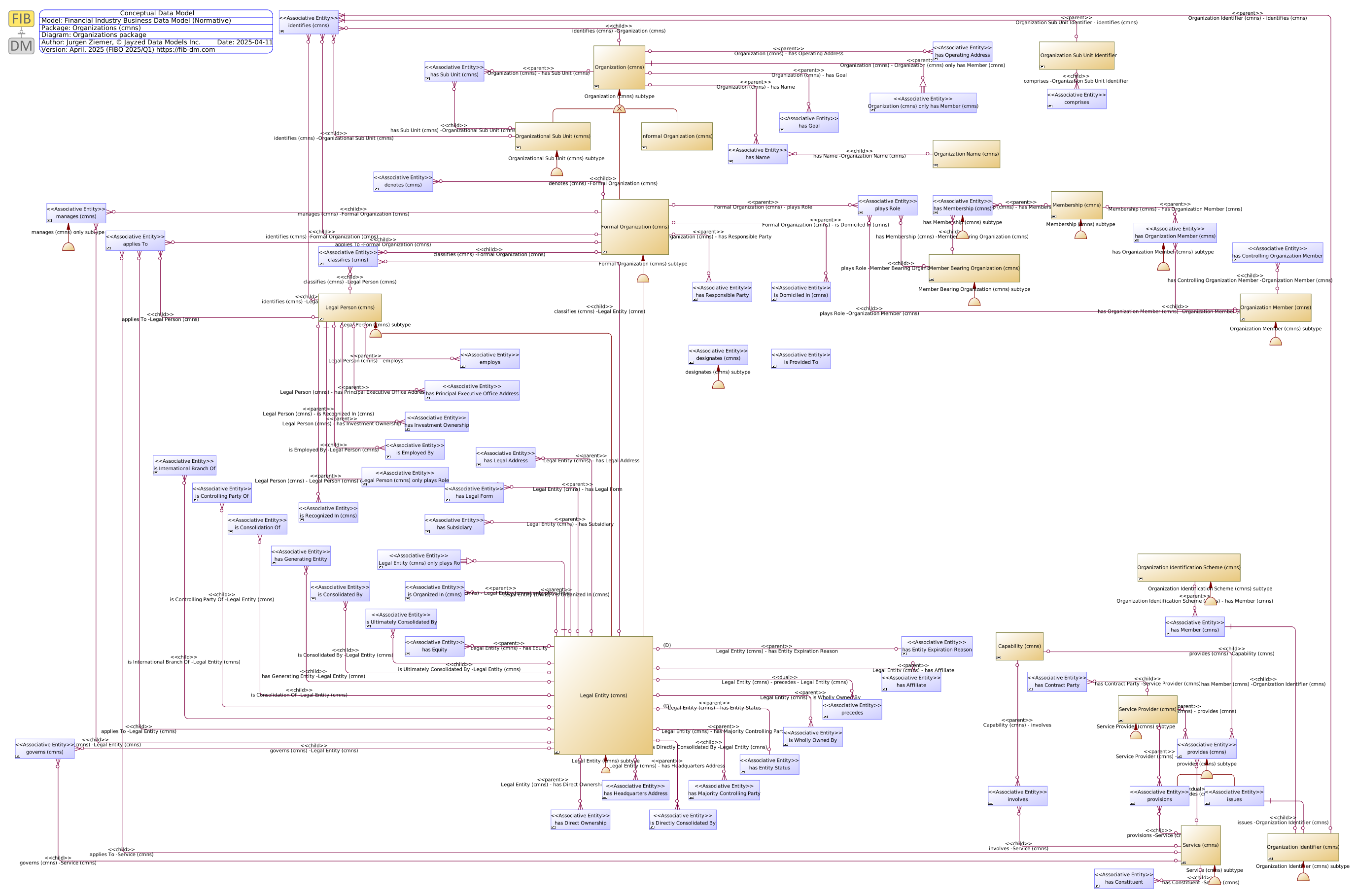
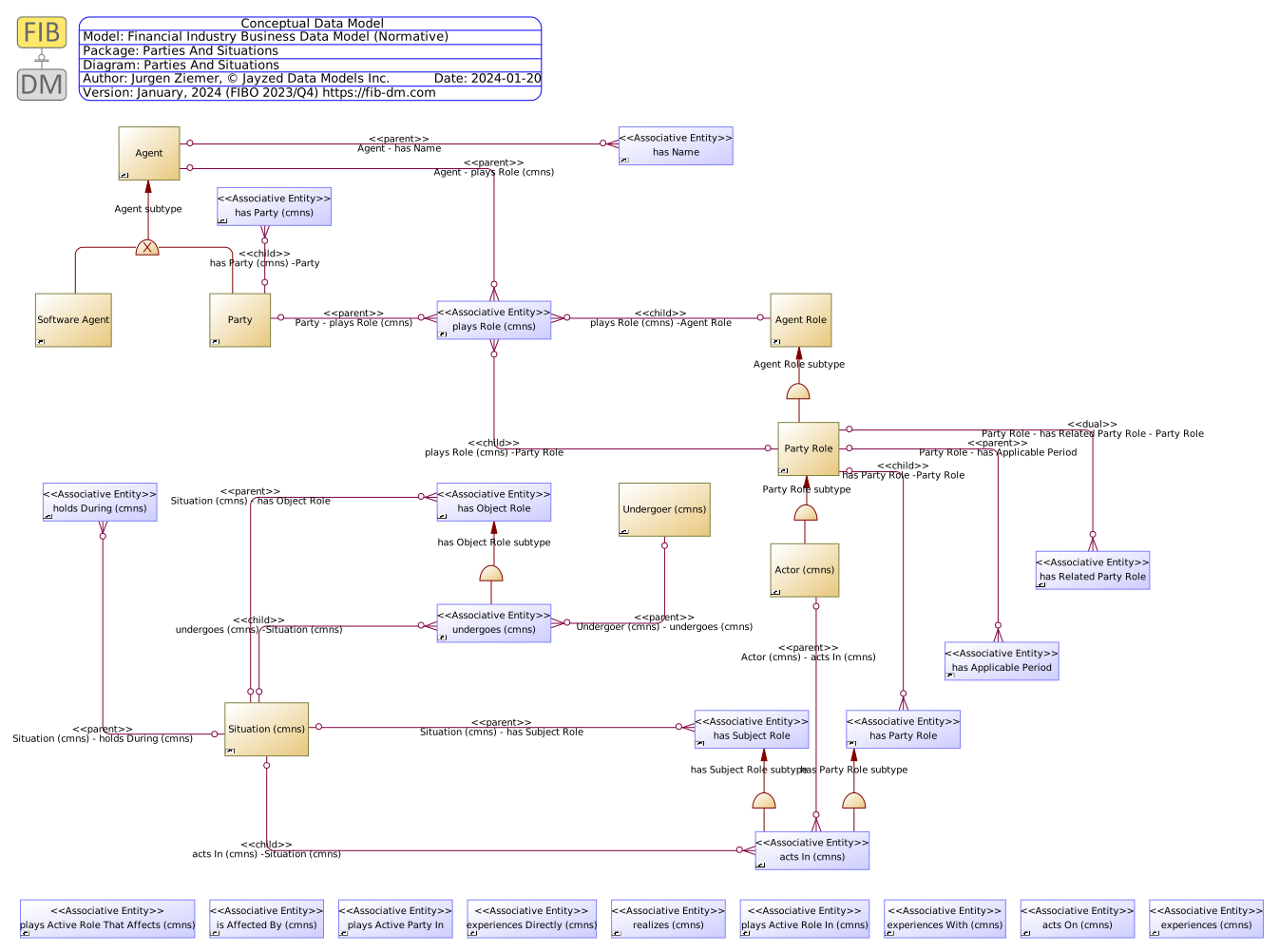
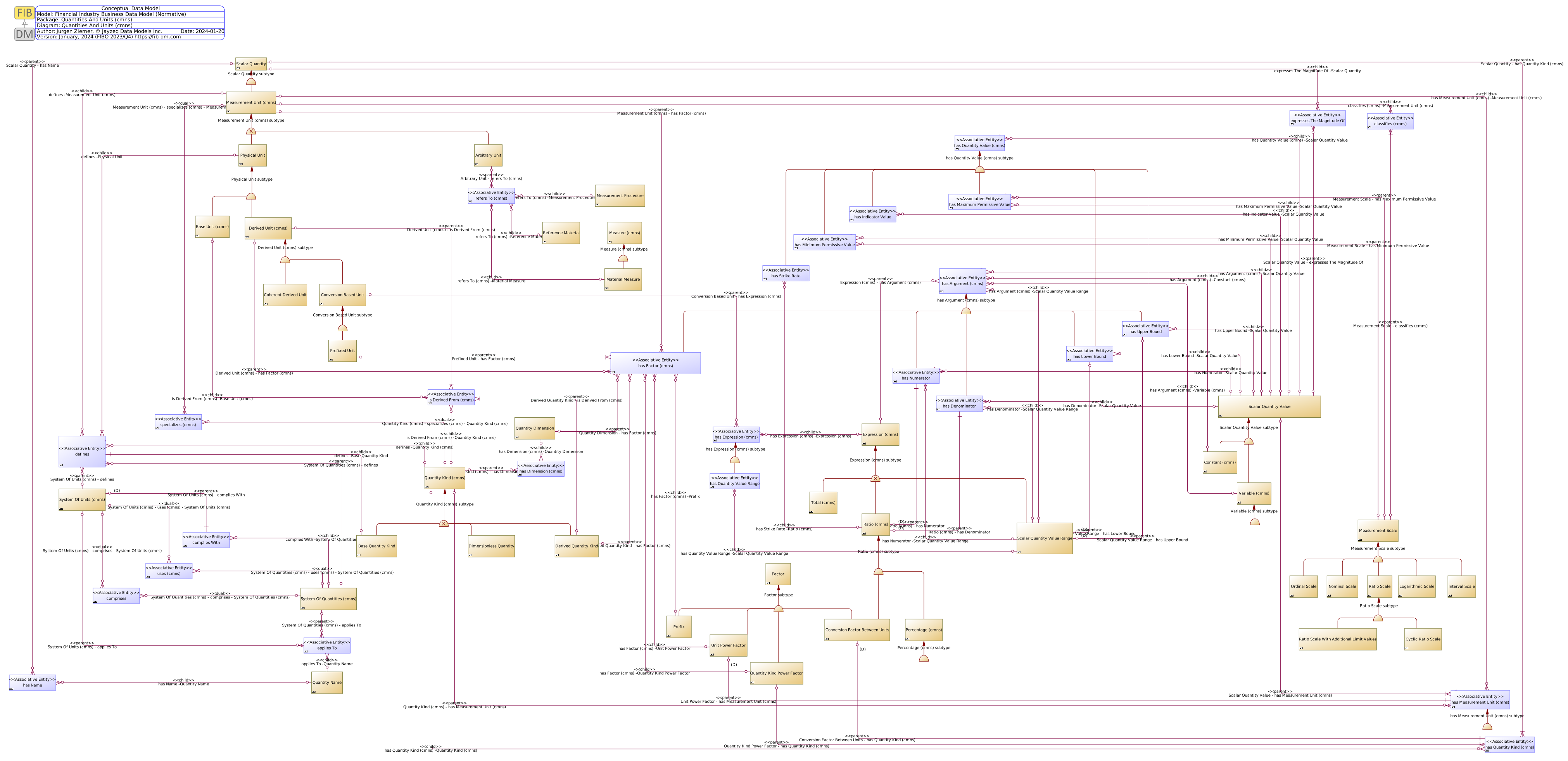
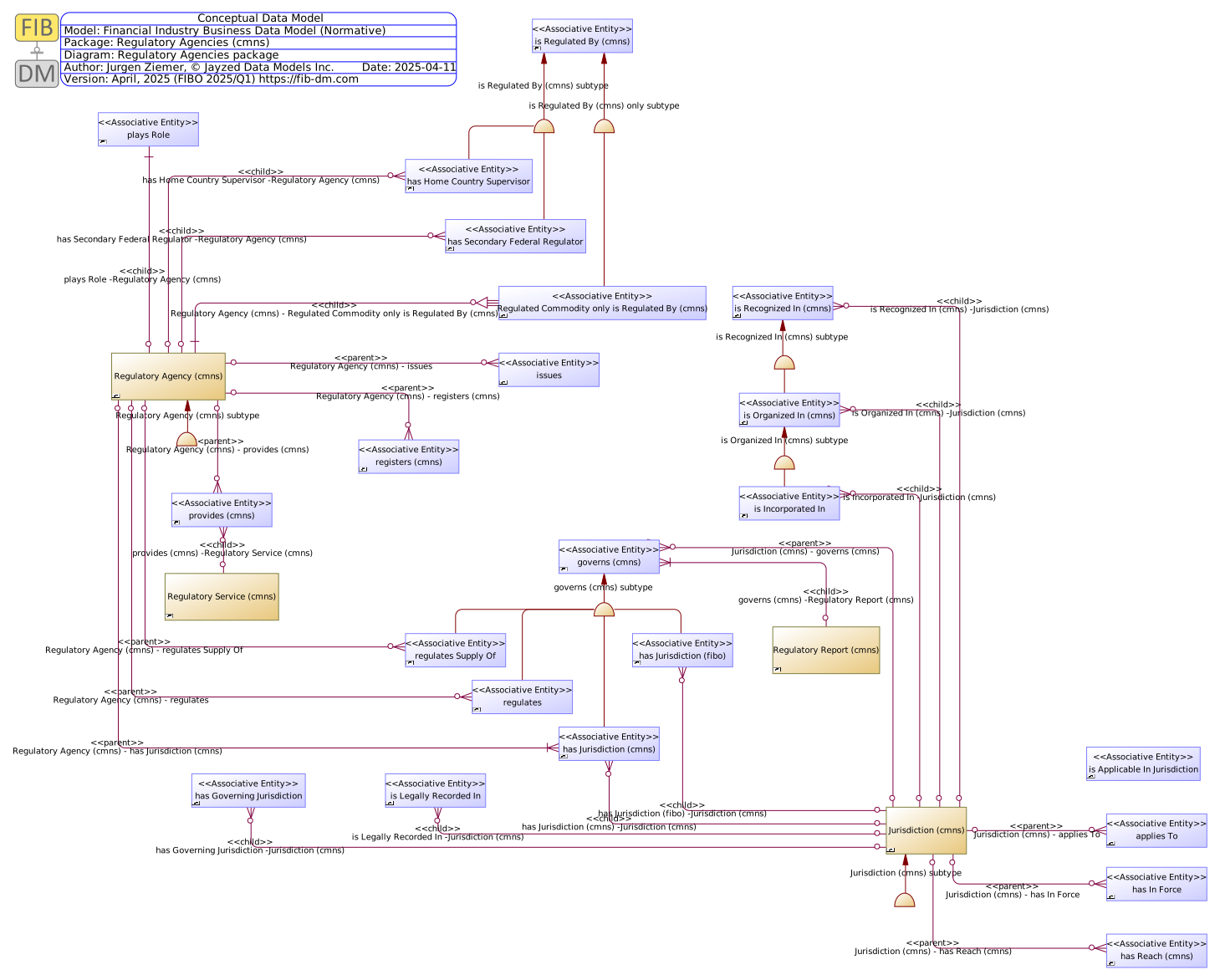
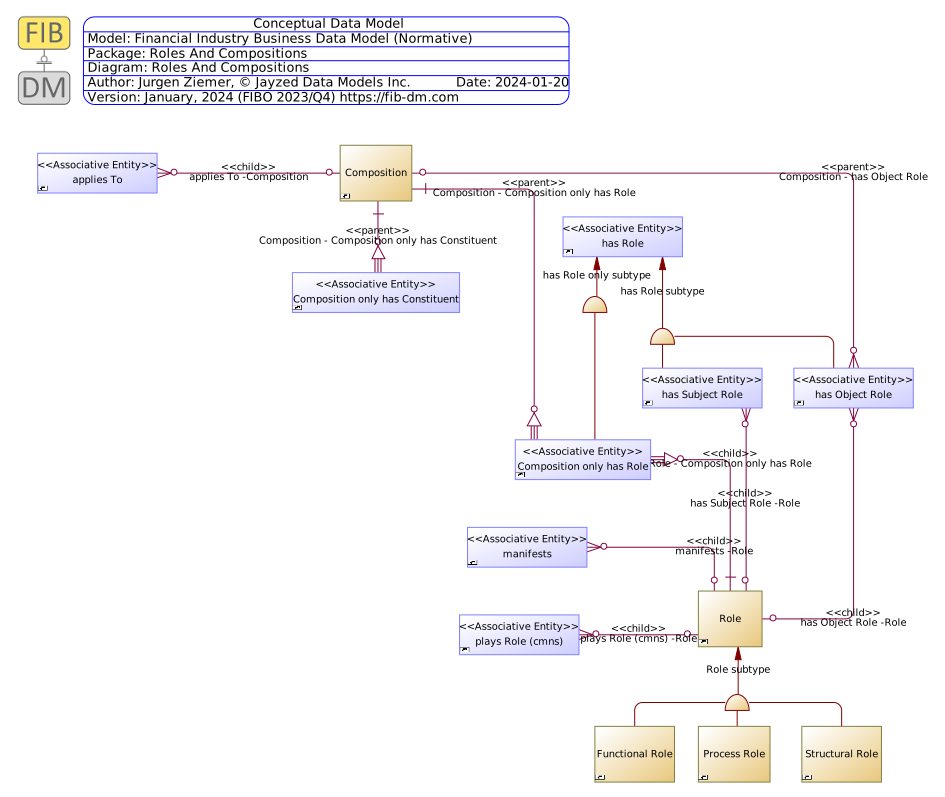
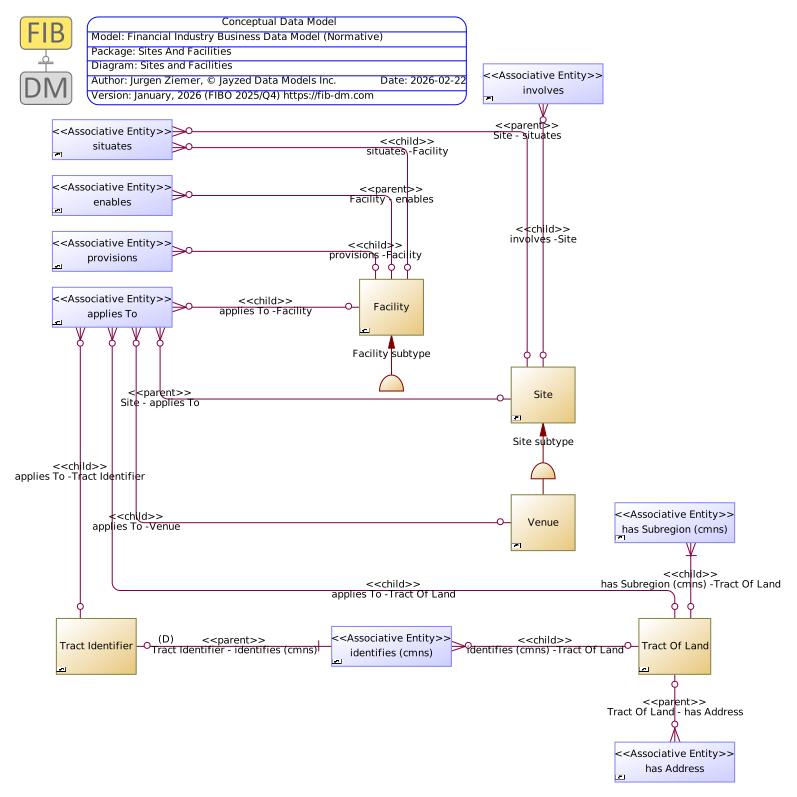
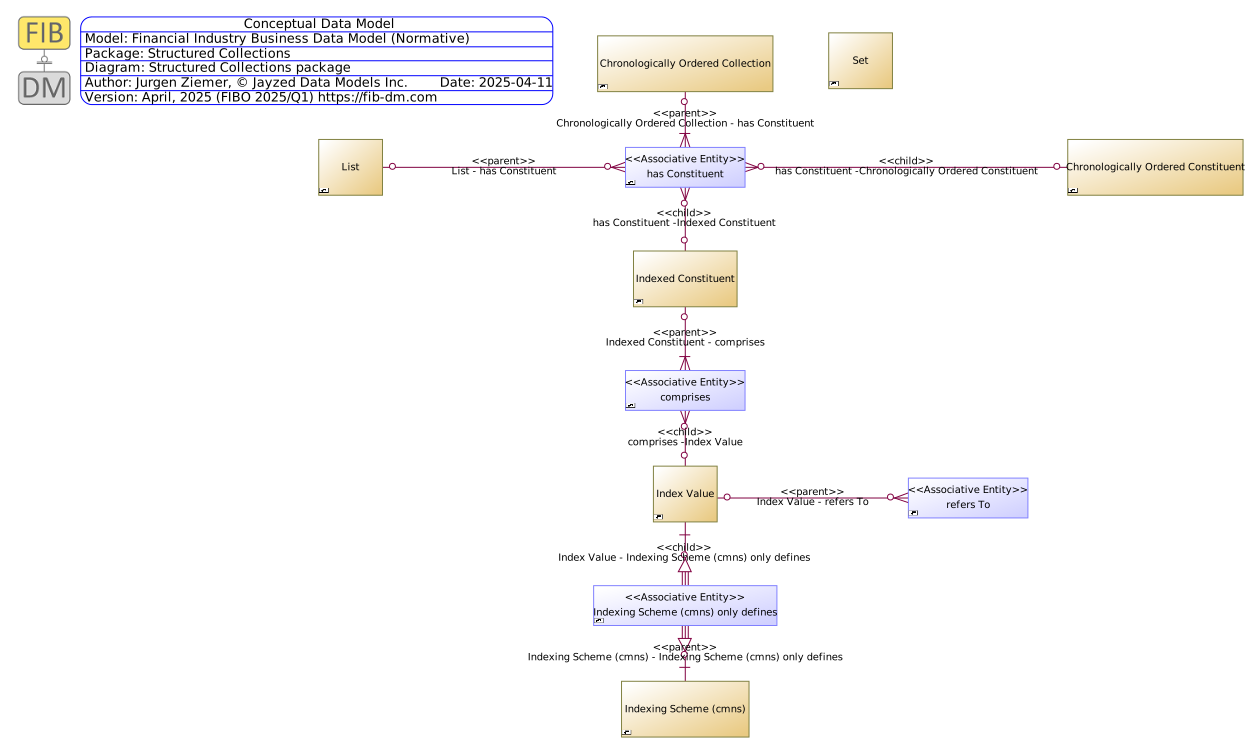
The diagrams depict Base Entities, Associative Entities (in blue), and their relationships for the 20 data model packages.
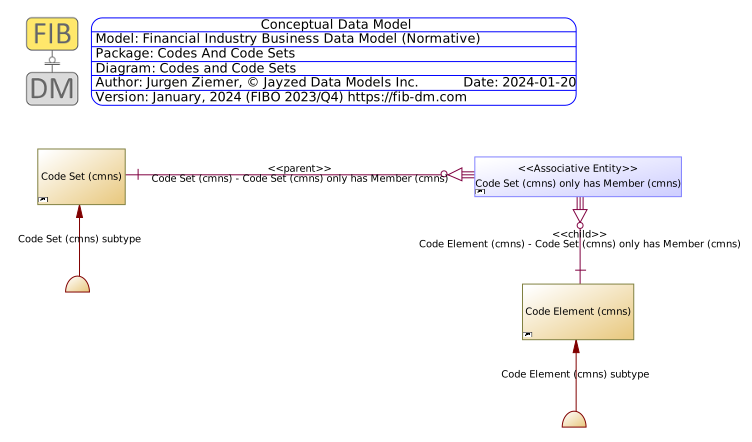
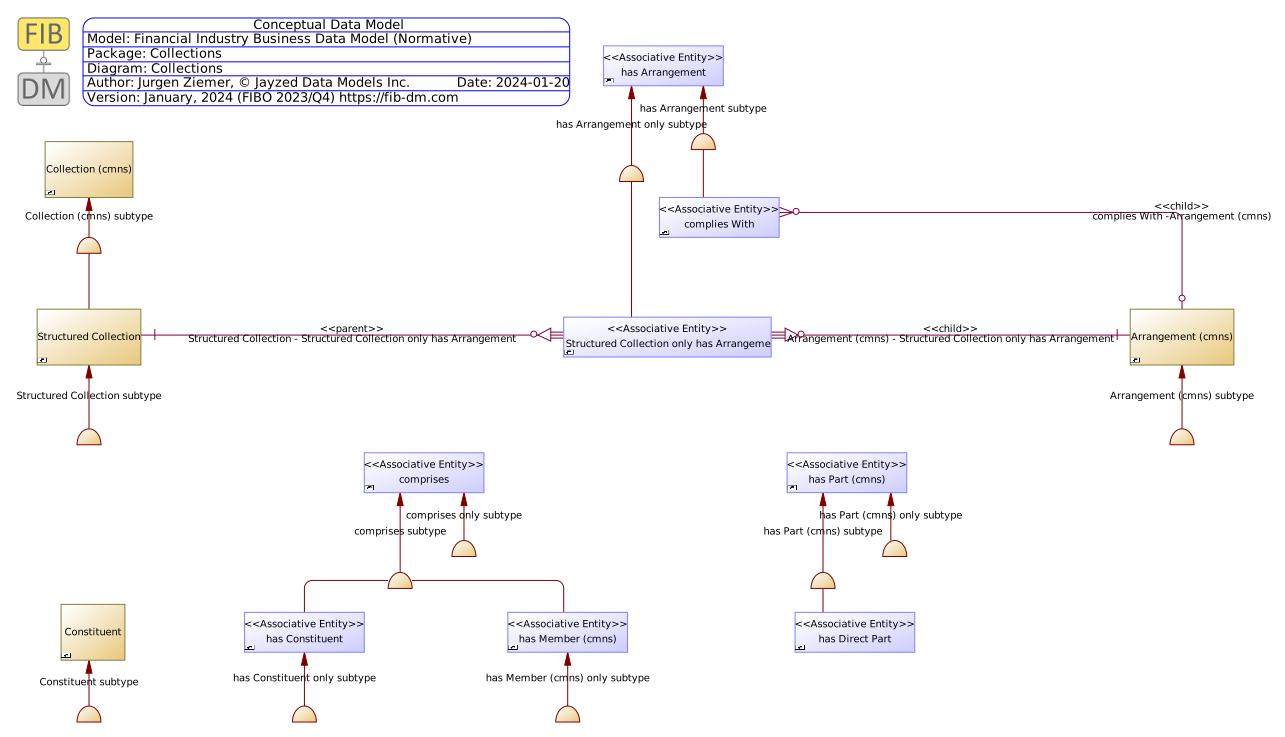
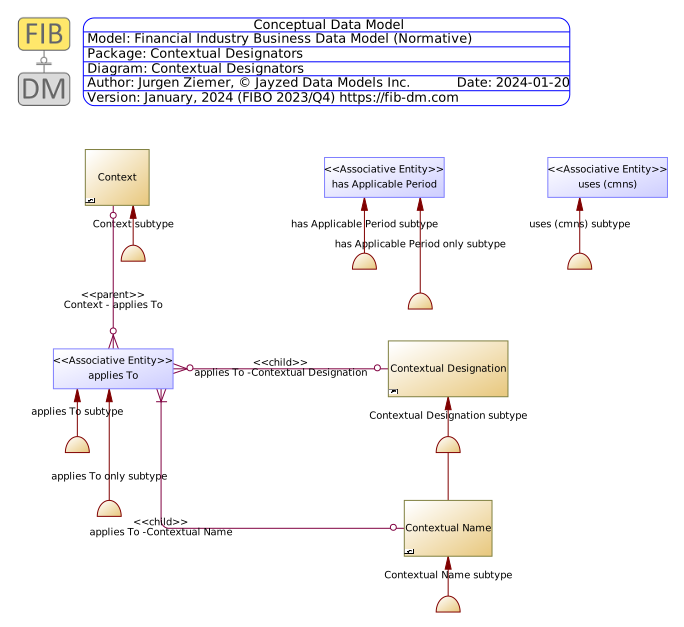
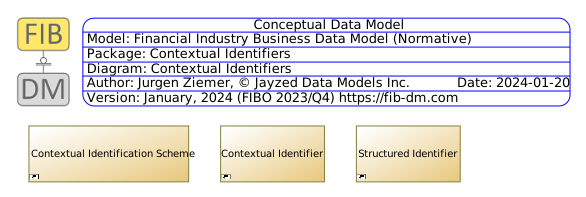


Package descriptions
The table lists the package name and code. The Comment derived from the source ontology’s abstract.
| Name | Code | Comment |
|---|---|---|
| Business Authorizations | cmns-bauth | The package for data model objects derived from the Business Authorizations ontology module. This ontology defines the concept of authorization from a business perspective, rather than security or access control viewpoint, as a situation or state of affairs, including related parties. It was derived from the FIBO Executives ontology and simplified/adapted for broader use. |
| Classifiers | cmns-cls | The package for data model objects derived from the Classifiers ontology module. This ontology defines abstract concepts for representation of classification schemes that enable the classification of arbitrary concepts into hierarchies (or partial orders) for use in many other ontologies, derived in part from the patterns defined in ISO 1087-1 for terminology work and ISO 11179-3, Metadata Registries. |
| Codes And Code Sets | cmns-cds | The package for data model objects derived from the Codes And Code Sets ontology module. This ontology defines commonly used concepts for describing codes, including standardized codes such as ISO language, country, and other code sets, the North American Industry Classification System (NAICS) codes, and custom code sets that many organizations develop for various purposes, derived from the patterns specified in ISO 11179-3, Metadata Registries. |
| Collections | cmns-col | The package for data model objects derived from the Collections ontology module. The collections ontology defines commonly used concepts for arrangements and schemes for organizing information and collections of things, such as structured collections that may be organized according to some scheme, and related very high level mereology relations to enable association of things with such collections and schemes. |
| Contextual Designators | cmns-cxtdsg | The package for data model objects derived from the Contextual Designators ontology module. The contextual designators ontology extends the designators ontology to incorporate applicable dates and times and facilitate the inclusion of other context that is commonly needed, derived in part from the patterns defined in ISO 11179-3, Metadata Registries. |
| Contextual Identifiers | cmns-cxtid | The package for data model objects derived from the Contextual Identifiers ontology module. The contextual identifiers ontology defines commonly used concepts for describing more complex identifiers, including those that apply for some period of time as well as those that are structured and include other codes or identifiers. |
| Dates And Times | cmns-dt | The package for data model objects derived from the Dates And Times ontology module. The dates and times ontology defines commonly used temporal concepts that cover those most frequently needed across domains, with a focus on terminology that is used in business applications. It is designed to be mappable to other date and time ontologies and specifications, such as the W3C Time Ontology in OWL (available at https://www.w3.org/TR/owl-time/), certain temporal elements in BFO 2020 (see https://basic-formal-ontology.org/bfo-2020.html), time concepts defined in schema.org, and the Object Management Group’s Date Time Vocabulary (DTV) specification (available at https://www.omg.org/spec/DTV/), without the corresponding overhead or in some cases, issues. The concepts were originally derived from a number of date and time standards including ISO 8601:2004 Representation of Dates and Times. The ontology itself was derived from the Financial Industry Business Ontology (FIBO) Financial Dates ontology, with minor revisions to better reflect requirements for mapping to other ontologies. |
| Designators | cmns-dsg | The package for data model objects derived from the Designators ontology module. The designators ontology defines commonly used concepts for naming, derived in part from the patterns defined in ISO 1087 for terminology work and ISO 11179-3, Metadata Registries. It includes several very high level semiotic relationships, including defines, describes, and denotes for associating designators with the concepts they reference. |
| Documents (cmns) | cmns-doc | The package for data model objects derived from the Documents (cmns) ontology module. This ontology defines high-level concepts for representation of documents, including legal documents and records, such as a transaction record, purchase history, or payment history. It is deliberately lightweight in order to accommodate mappings to other document and bibliographic ontologies. |
| Identifiers | cmns-id | The package for data model objects derived from the Identifiers ontology module. The identifiers ontology defines commonly used concepts for describing identifiers and the identification schemes that define them, such as various national and international identifiers for legal entities, financial instruments, and the like, derived from the patterns specified in ISO 11179-3, Metadata Registries. |
| Languages (cmns) | cmns-lang | The package for data model objects derived from the Languages (cmns) ontology module. This ontology, based at a very high level on ISO 639 as well as the language element of the Language Tag specified in BCP 47 (RFC 4646, RFC 4647), defines the concept of a language, and covers natural and engineered languages. It is provided in Commons as a bridge between a number of OMG ontologies, including the API4KP ontologies, the ontology associated with the Distributed Ontology, Model, and Specification Language (DOL) specification, the Languages, Countries, and Codes (LCC) specification and ontologies, and the Multiple Vocabulary Facility (MVF) ontologies, among others, and was derived from the original LCC Language Representation ontology. The model aligns with the latest ISO 639 revisions, which were formerly part of ISO-639-4, and with definitions in other ISO terminology and thesauri standards. |
| Locations | cmns-loc | The package for data model objects derived from the Locations ontology module. This ontology provides a very high level definition of geographic region and geopolitical entity related concepts, including, but not limited to, countries, sub-country regions such as states and provinces, and municipalities. The representation was derived from a combination of ISO 3166, the UN M49 Region codes, Geonames, the SWIFT registry, the UN FAO and CIA World Factbook, and other sources. It aims to provide a systematic description of the vocabulary used for country and geopolitical entity representation, useful for mapping among the various names and codes for countries and their subdivisions used world-wide, including but not limited to FIPA and International Olympics codes for countries, (based strictly on requirements for business applications, not broader geographic or political uses).The terms defined herein terms are reused by the OMG’s LCC controlled vocabulary representing ISO 3166 country and country subdivision codes, and may be mapped to other standards and de facto standards such as those mentioned. |
| Organizations | cmns-org | The package for data model objects derived from the Organizations ontology module. This ontology defines high-level concepts for organizations, legal entities, and related terms, such as organization membership. It is purposefully underspecified to facilitate mapping to specific organization ontologies, such as the W3C organization ontology, organization from a business (BMM or BPMN) perspective, organization from a records management (RMS) and provenance (PPMN) perspective, and to other models describing organizations. |
| Parties And Situations | cmns-pts | The package for data model objects derived from the Parties And Situations ontology module. This ontology defines the high-level concepts of parties and the roles they play in various situations. |
| Quantities And Units | cmns-qtu | The package for data model objects derived from the Quantities And Units ontology module. This ontology provides a core set of concepts for quantities, units, systems of quantities, and systems of units. The most widely accepted, scrutinized, and globally used system of quantities and system of units are the International System of Quantities (ISQ) and the International System of Units (SI). They are formally standardized through [ISO 31] and [IEC 60027]. The harmonization of these two sets of standards into one new set [ISO/IEC 80000] has been published by ISO in 2009 and 2010. This ontology is based on the Object Management Group (OMG)’s SysML standard and on ISO/IEC 80000-1:2009, which refers normatively to the ISO/IEC Guide 99:2007. It is compatible with and can be mapped directly to the OMG Date Time Vocabulary (DTV) Quantities Ontology, the de-facto QUDT ontology representing Units of Measure, Quantity Kinds, Dimensions and Data Types (see http://www.qudt.org/), the Units of Measurement Ontology (UO) ontology available from the BioPortal (https://bioportal.bioontology.org/ontologies/UO) and others, as well as the quantities and units library in the SysML specification. |
| Registration Authorities | cmns-ra | The package for data model objects derived from the Registration Authorities ontology module. This ontology defines concepts for representation of registration authorities, registrars, registration-specific identifiers and related identification schemes. It was derived from the FIBO Registration Authorities Ontology and ISO 11179-3, and adapted for broader use. |
| Regulatory Agencies (cmns) | cmns-rga | The package for data model objects derived from the Regulatory Agencies (cmns) ontology module. This ontology defines general purpose concepts for representation of regulatory agencies, also known as regulatory authorities or regulators. It was derived from the FIBO Regulatory Agencies, Legal Capacity, and Jurisdictions ontologies and simplified/adapted for broader use. |
| Roles And Compositions | cmns-rlcmp | The package for data model objects derived from the Roles And Compositions ontology module. This ontology defines the high-level things defining roles, which enable specification of the various participants in something, and the notion of a composition, i.e., relating something that is a specification for a ‘whole’, such as a product or recipe, to its ingredients or constituents, potentially with respect to some context-specific requirements. |
| Sites And Facilities | cmns-sfc | The package for data model objects derived from the Sites And Facilities ontology module. This ontology provides high-level concepts related to facilities, both virtual and physical, including sites that provide the context for various facilities. |
| Structured Collections | cmns-strcol | The package for data model objects derived from the Structured Collections ontology module. This ontology extends the concept of a structured collection to include sets, lists, and collections whose elements are ordered chronologically or are indexed. |